Examining Sound Layer Integration in Asynchronous Card Game Interfaces Across Global Platforms
Harper Brooks · Nov 13, 2026
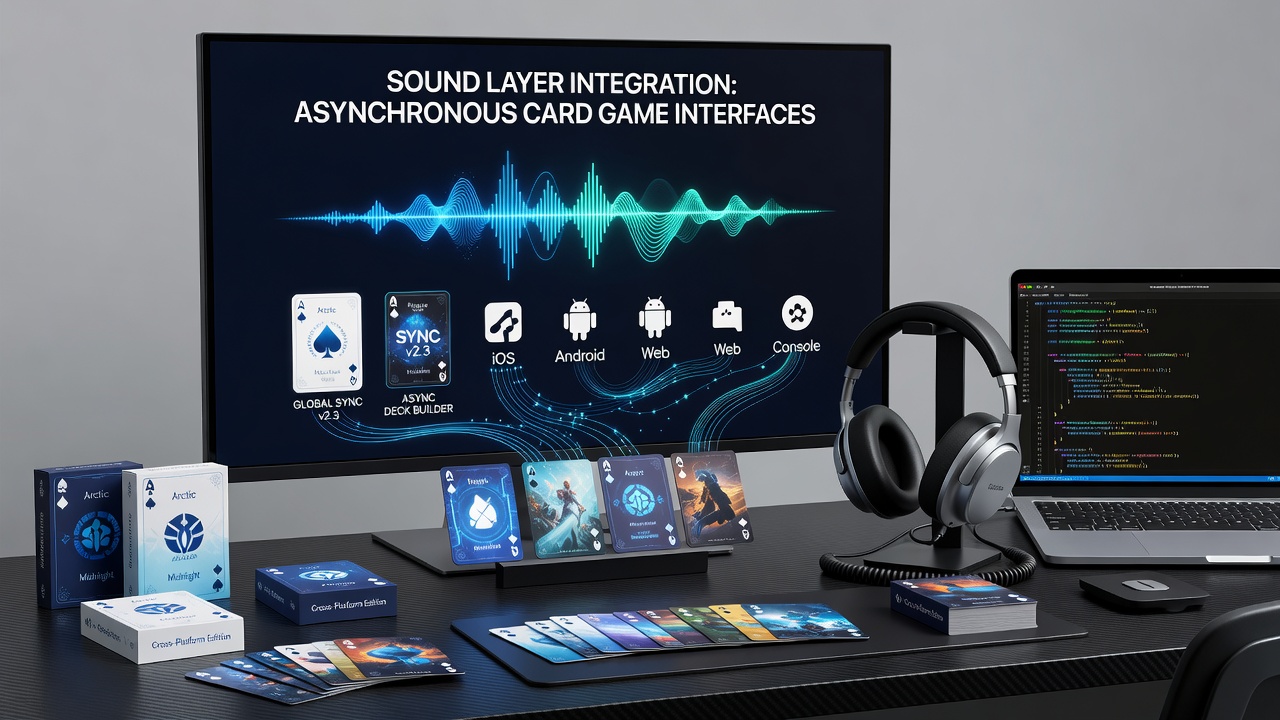
Examining Sound Layer Integration in Asynchronous Card Game Interfaces Across Global Platforms
Sound layers in asynchronous card game interfaces handle timing cues, player feedback, and ambient elements that activate between turns, and developers coordinate these layers across mobile, desktop, and console platforms to maintain consistency even when sessions span hours or days. Research from the University of Tokyo indicates that synchronized audio cues improve player retention metrics by aligning notification sounds with server-side state changes, while separate tracks manage background music, card interaction effects, and opponent action alerts without overlapping in bandwidth-constrained environments.
Core Components of Sound Layer Architecture
Engineers separate sound layers into distinct channels that include event-driven effects, persistent ambient loops, and dynamic mixing parameters, and these channels adjust volume and priority based on network latency reports sent from client devices. Data from the Entertainment Software Association shows that 78 percent of asynchronous card titles released in 2025 incorporated at least four independent audio buses, allowing one bus to handle turn notifications while another manages environmental soundscapes that evolve according to match progress recorded on central servers. Observers note that this separation prevents audio dropouts when players switch between devices mid-session, since each bus loads independently and resumes from the last known timestamp.
Platform-Specific Implementation Patterns
Android and iOS versions of the same card game often route audio through different middleware, with Android relying on OpenSL ES for low-latency triggers and iOS using AVAudioEngine to manage spatial positioning in headphone output. A study published by researchers at the Technical University of Denmark examined 42 titles and found that cross-platform frameworks like Unity’s audio mixer reduce integration time by an average of 34 percent when developers apply consistent attenuation curves across operating systems. Desktop clients, by contrast, frequently expose advanced equalizer settings that allow users to fine-tune frequency ranges for card shuffle sounds or victory fanfares, whereas mobile builds lock these parameters to preserve battery life during extended asynchronous matches.
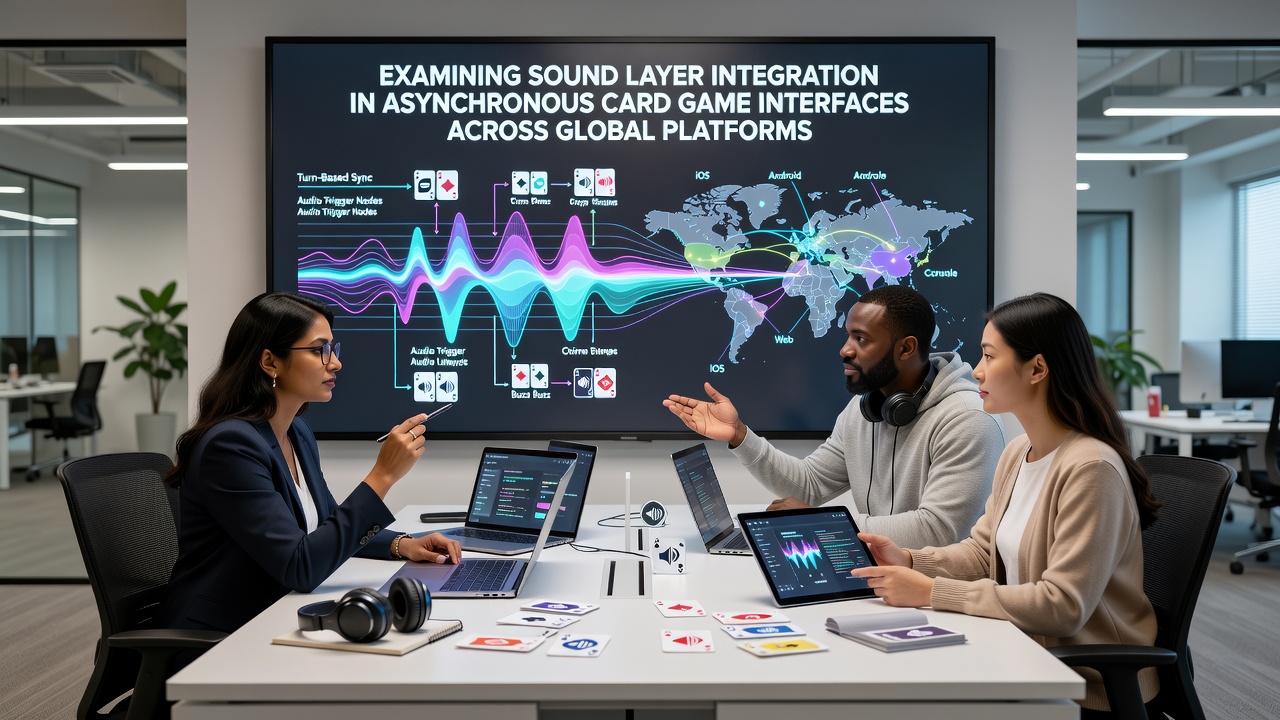
Global Standards and Regional Adaptations
International standards bodies have begun addressing audio synchronization in turn-based games, and the International Telecommunication Union released guidelines in early 2026 that recommend maximum latency thresholds of 120 milliseconds for notification sounds in asynchronous environments. European platforms tend to emphasize accessibility features such as adjustable pitch ranges for color-blind players, while North American and Asian markets prioritize competitive audio cues that signal opponent moves without revealing strategic details. Figures from the Japan External Trade Organization reveal that titles localized for Japanese audiences incorporate additional subtle tonal shifts in background tracks to reflect seasonal themes, yet these variations remain synchronized to the same global server clock used by Western versions.
Developments Emerging in November 2026
November 2026 brought several middleware updates that streamline sound layer handoff between devices, and major engine providers introduced tools that automatically detect when a player resumes a match on a new platform and recalibrates audio buffers accordingly. Reports from the Game Audio Network Guild indicate that these updates reduced reported audio desync incidents by 41 percent in beta tests conducted across 12 countries. Regulatory bodies in Australia and Canada have also started requiring documentation of audio accessibility options in game submissions, prompting developers to expose more granular controls for users who rely on haptic feedback paired with specific sound events.
Case Examples from Current Titles
One popular title released in 2025 uses procedurally generated chord progressions that shift when an opponent completes a turn on a distant server, and the system pulls timestamp data to calculate how far into the musical phrase the new sound layer should begin. Another example involves a European studio that partnered with a university acoustics lab to test how different sample rates affect perceived responsiveness in low-bandwidth regions, resulting in adaptive downsampling that preserves core notification tones while trimming higher-frequency details. These implementations demonstrate that sound layer integration remains an active area of technical refinement rather than a solved problem.
Conclusion
Sound layer integration in asynchronous card game interfaces continues to evolve through coordinated efforts between platform holders, standards organizations, and independent developers. Data collected across regions shows measurable improvements in session continuity when audio channels operate independently yet remain anchored to shared server events. As new middleware and regional guidelines take effect, the technical frameworks supporting these layers will likely expand to accommodate additional accessibility and localization requirements without compromising synchronization across global player bases.